

Builder Gel 101: What It Is, How to Use It & Does It Ruin Your Nails?
Builder gel is the not-so-secret weapon behind the strong, glossy, natural-looking nails all over your feed (often under its nickname, BIAB). If your nails bend, peel or never seem to grow past a certain point, builder gel promises a tougher overlay without the drama of acrylics. But is it safe, does builder gel actually ruin your nails, and can a total beginner use it at home? Here's everything you need to know before you try it.
What Is Builder Gel?
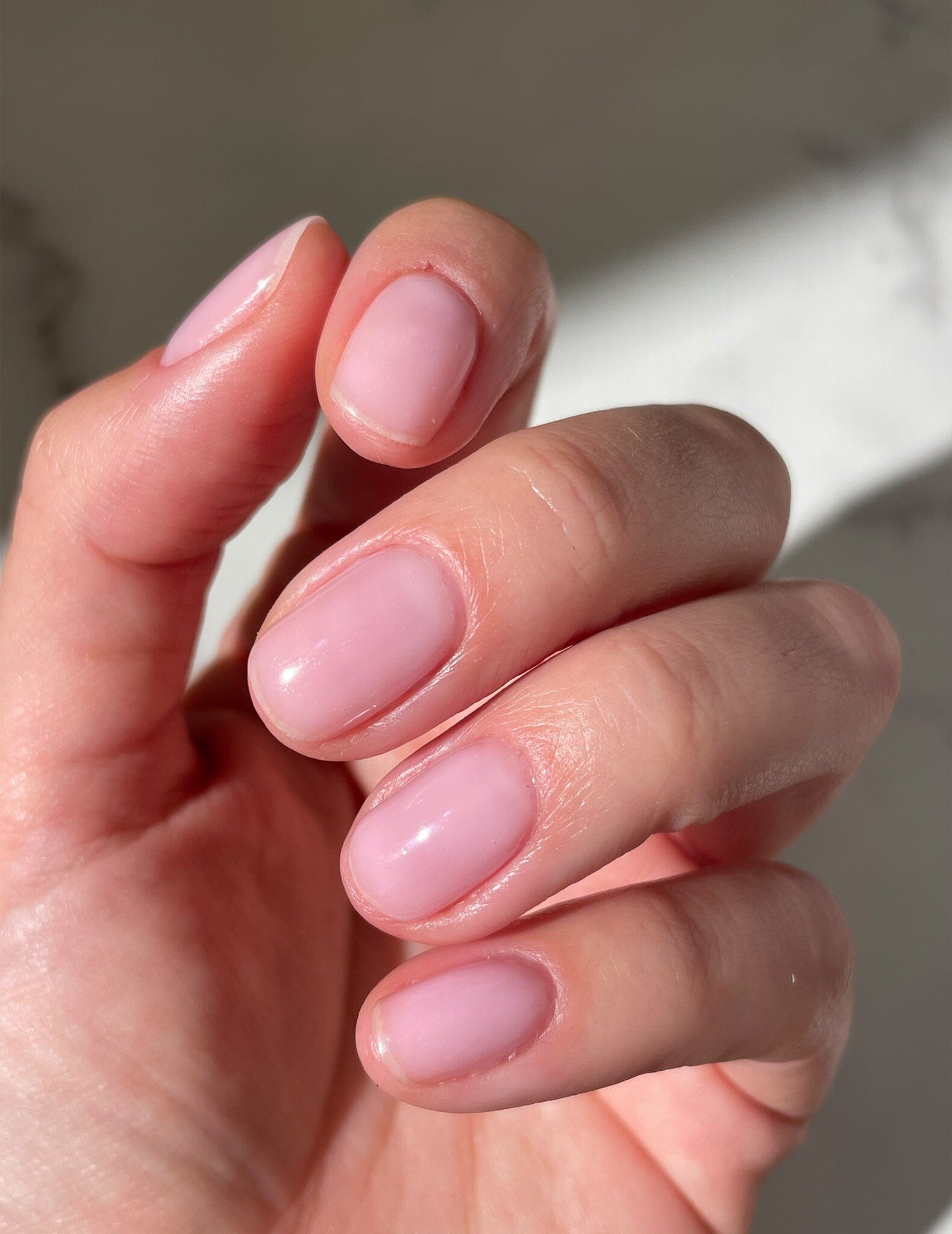
Builder gel is a thicker, more flexible type of gel that you apply to the natural nail and cure under an LED lamp to build a strong, protective overlay. Unlike regular gel polish, which is thin and mainly adds color, builder gel has structure. It reinforces weak nails, smooths out ridges, and can add a hint of length as well. It comes in clear or in sheer, milky and nude shades you can happily wear on their own or under color.
Is BIAB the same as builder gel?
Pretty much, yes. BIAB stands for "Builder In A Bottle" - a brand-born nickname that's become shorthand for any soft builder gel used to strengthen the natural nail. So when you see BIAB nails or a BIAB manicure online, they're talking about the same builder-gel technique we cover here. The name changes; the product does the same job.
How Do Builder Gel Work, and How Is It Different
Here's the quick version of builder gel vs base coat: a base coat is a thin grip layer that helps polish stick, while builder gel is a thicker structural layer that actually adds strength and a touch of length. You can't build structure with a base coat, and you wouldn't reach for builder gel just to prep for color - they do different jobs. Builder gel also differs from hard gel (more rigid, must be filed off) and rubber base (a lighter, semi-structural in-between). Here's how the three closest options compare:
| Feature | Builder gel | Gel base coat | Hard gel |
| Main job | Strength + a little length | Helps color stick |
Extensions + max strength
|
| Feel | Medium-thick, flexible | Thin | Thick, rigid |
| Adds length? | A little | No | Yes |
| Removal | Soak-off or gentle file | Soak-off or gentle file | File off only |
| Best for | Weak / peeling natural nails | Everyday gel color | Long extensions |
| Beginner-friendly? | Yes | Yes | No |

The Tools and Products You Need
To do builder gel at home you need surprisingly little: the builder gel itself, an LED lamp to cure it, and a few basics to prep and finish. Here's the beginner builder gel kit, start to finish.
Your builder gel kit - checklist
- Builder gel: Multi-Use Builder Gel, which comes in soft, milky shades (like Meringue) you can wear bare.
- LED lamp: builder gel only cures under light. Use the Le Pro lamp, or grab a Mini Kit that includes a LED mini lamp.
- Nail drill or file: shape and refine (and speed up removal) with the E-file Nail Drill or a hand file/ sanding block.
- Prep (primer + cleanser): shape and buff your nails, wipe away oils with a nail cleanser and add Le Chip-free Primer so the gel grips and lasts.
- Base coat (optional): can be used in combinaison with the Builder gel to add extra adhesion.
- Top coat (for gloss): seal and shine with the Gel Shine Top Coat.
- Color (optional): add a 3-in-1 gel polish on top, or leave the builder gel bare.
- Cuticle and hand aftercare: a cuticle oil pen, plus hand cream, keep nails and skin healthy between manis.
Is Builder Gel Safe? Does It Ruin Your Nails?
Builder gel does not ruin your nails when it's applied and removed properly. The damage people blame on builder gel almost always comes from picking or peeling it off, over-filing the natural nail, or rushing removal - not the gel itself. Used correctly, builder gel actually protects and supports weak nails while they grow.
The pros: it adds real strength, helps nails grow past the bend-and-snap stage, flexes comfortably, looks natural, and lasts for weeks. For a lot of people it's the thing that finally breaks the peeling cycle and gives them stronger nails.
The cons: it needs an LED lamp, and uncured gel can irritate skin, so keep it off your cuticles and cure fully. Poor removal (peeling it!) is the only real nail-wrecker.
Regarding the lamps: ours are LED, so UV exposure is very low and rapid. For more details, see our article: Are UV lamps dangerous? The golden rule for healthy nails: never peel off the builder gel.
How to Apply Builder Gel at Home, Step by Step
Applying builder gel at home is beginner-friendly once you know the rhythm: prep, thin layer, build, cure, finish. Always work on clean, dry, oil-free nails and keep the gel off your skin. Here's the builder gel tutorial, step by step.
Step 1: Prep your nails
Push back your cuticles, then lightly buff the shine off the nail surface so the gel can grip. Wipe each nail with cleanser to remove oil and dust, and apply a thin coat of primer. Good prep is 90% of a builder gel manicure that lasts.
Step 2: Apply a thin base layer
Brush on a very thin first coat of builder gel, sealing ("capping") the free edge. Keep it off the skin. Cure under your LED lamp per the product instructions. This thin anchor layer is what stops lifting.
Step 3: Build your structure
Add a slightly thicker bead of builder gel and guide it toward the centre of the nail to create a subtle apex (the strong point). Let it self-level for a second, then cure. This is where the strength and the barely-there length come from.
Step 4: Clean to wear alone
Once cured, if you want to wear the builder on its own, simply wipe the nails with a cleanser prep pad to remove the sticky layer on top.
Step 5: Add colour or top coat
If you want to add color, simply apply a 3-in-1 gel colour on top, or just seal with a glossy top coat as you would normally. Cure.
Step 6: Hydrate
Finish with our cuticle oil pen and a little hand cream. Healthy, hydrated cuticles keep your builder gel manicure looking fresh and help it last.

How to Remove Builder Gel at Home
To remove builder gel at home, gently file down the shiny top layer, wrap you nails in our Remover wraps and hold in place with remover clips for 15 minutes, then gently push off the softened gel. Never force or peel it - if it resists, soak a little longer. Builder gel is soak-off, so with patience it lifts away without wrecking your natural nails.
- File the top: break the glossy seal with a file or the E-file Nail Drill (don't file into your natural nail).
- Soak: acetone-soaked wraps + remover clips, for 15 minutes.
- Push, don't pick: gently push off the softened gel with a cuticle pusher; re-soak anything stubborn.
- Nourish: always finish with cuticle oil and hand cream to rehydrate.
Who Builder Gel Is For, and What It Costs
Builder gel is ideal if your nails are weak, peeling, bendy or slow to grow, or if you simply love a natural, glossy, low-maintenance look. It's brilliant on short natural nails that need reinforcement (more on that in the FAQ). If you're after long, dramatic extensions, hard gel or tips will serve you better - but for everyday strength, builder gel is the sweet spot.
It's also your shortcut to the milky-nail trend: Meringue is a soft, sheer shade you can wear alone, or layer milky gel polish shades like Marshmallow or Coconut Yogurt on top for that glazed finish. Now, for the money question: does doing it at home pays off fast?
| Salon BIAB / builder overlay | At home (Le Mini Macaron) | |
| Price | ~EUR 40-60 per set | ~EUR 15 per builder gel bottle (many manis) |
| What you need | One appointment | Multi-Use Builder Gel (~EUR 15) + LED lamp (Mini Kit ~EUR 36 with lamp, or Le Pro ~EUR 55) |
| Every 3-4 weeks for a year | ~13 visits = EUR 520-780 / year | Lamp paid once, then ~EUR 15 refills - usually well under EUR 150 / year |
| Time | Book + travel + sit |
~30-40 min at home |
Key Takeaways
- Builder gel is a thick, flexible gel cured under an LED lamp to give natural nails a strong, protective overlay.
- BIAB (Builder In A Bottle) is just a nickname for the same soft builder-gel technique.
- It doesn't ruin your nails when applied and removed correctly - the damage comes from peeling it off.
- It's different from a base coat (grip only) and hard gel (rigid, for extensions).
- Beginner-friendly at home: prep, thin layer, cure, build, cure, finish - and soak off to remove.
- Great for weak, peeling or short natural nails that need strength and a natural, milky finish.
FAQ
How long does builder gel last?
Builder gel typically lasts two to three weeks, and up to four or five with infills, thanks to its stronger, more flexible structure. Longevity depends greatly on prep and aftercare: oil-free nails before application and cuticle oil afterwards help it stay put. Avoid picking, and it'll grow out neatly with your natural nail.
Can you use builder gel on short natural nails?
Yes - short natural nails are one of the best uses for builder gel. A thin overlay adds strength and protection so they can grow past the peel-and-snap stage, while a subtle apex keeps them from bending. You don't need length to benefit; even a barely-there layer makes short nails tougher and glossier.
Builder gel vs Gel X - what's the difference?
Gel X uses full pre-shaped soft-gel tips glued onto your nail for instant length, while builder gel is a liquid overlay you build directly onto your own nail. Choose Gel X for long, dramatic extensions; choose builder gel for natural strength, a little length and a lower-maintenance, grow-it-out look.
How can I strengthen weak nails?
Strengthen weak nails by protecting them while they grow: a thin builder gel overlay adds support, daily cuticle oil keeps them flexible, and gentle soak-off removal prevents damage. Avoid peeling gel, harsh filing and using nails as tools. Consistency beats any single product - give it a few weeks.
Can beginners use builder gel at home?
Absolutely. Beginner builder gel is very doable with the right kit: prep well, work in thin layers, keep the gel off your skin, and cure fully under an LED lamp. Start with a milky shade that hides small imperfections, and you'll get stronger, natural-looking nails without a salon appointment.


.%20If%20your%20nails%20bend,%20peel%20or%20never%20seem%20to%20grow%20past%20a%20c...)